Rapid-Digestion Trypsin and Rapid-Digestion Trypsin/Lys-C Kits
Minimize Protein Digestion Time, Maximize Results
- Faster digestion time
- Streamlined workflow
- Tighter coefficients of variation

Catalog Number:
Choose a Kit
Size
Catalog Number: VA1060
Catalog Number: VA1061
Trypsin Digestion in as Little as 60 Minutes
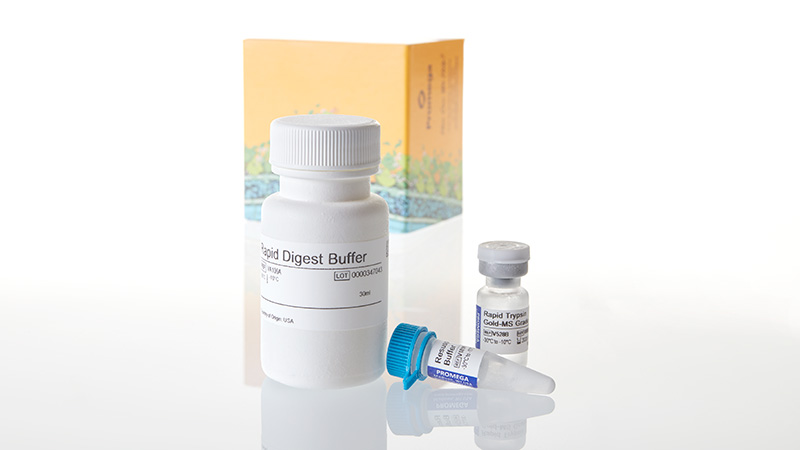
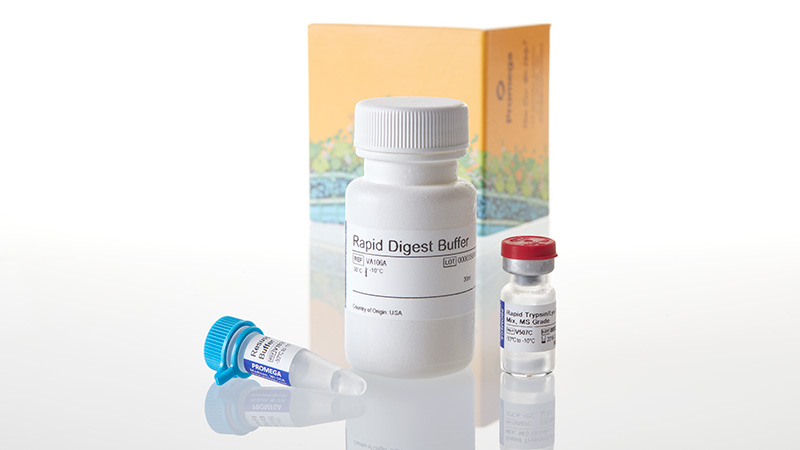
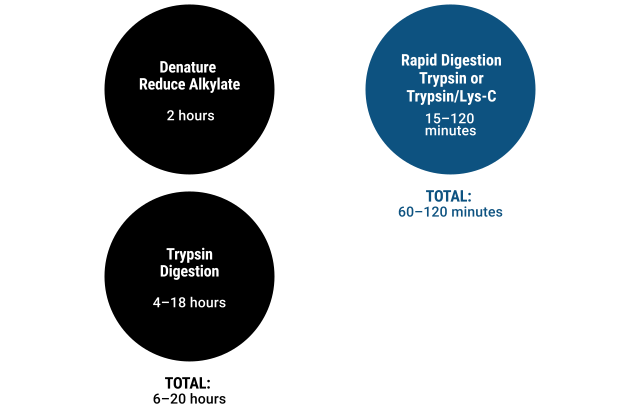
The Rapid-Digestion Trypsin and Rapid-Digestion Trypsin/Lys-C Kits are designed to shorten protein digestion times to 60 minutes versus the typical 4–18 hours required for trypsin digestion. Both kits contain three components: i) protease (Trypsin or Trypsin/Lys-C Mix); ii) protease Resuspension Buffer; and iii) Rapid-Digestion Buffer optimized for faster protein digestions.
Trypsin digestion with these kits follows a simple-to-use protocol that is both fast and efficient. The protocol is flexible, can accommodate a large range of sample volumes and protein concentrations and requires no special laboratory equipment or off-line desalting. The entire sample preparation procedure is performed in as little as 60 minutes.
Simple Process Enables Multiomic Analyses from a Common Cell Culture Sample
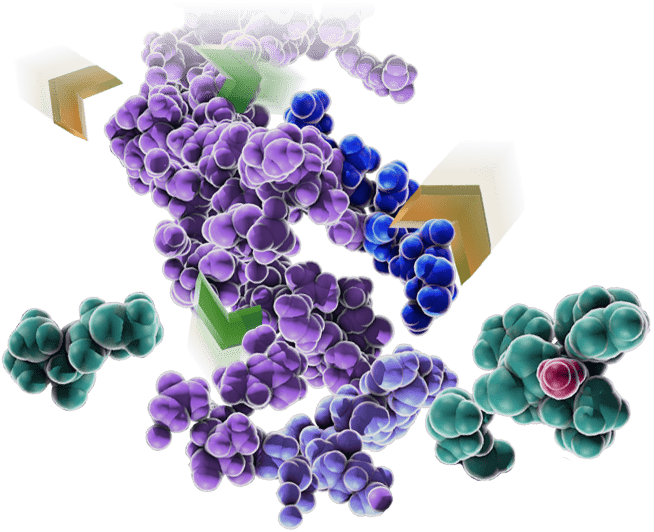
The reach of omic analyses now includes the breadth of the cell life cycle, allowing study of processes from translation of RNA to protein, through proteome development and interactions, and metabolic activities. However, as Caprioli et al. (2018) note:
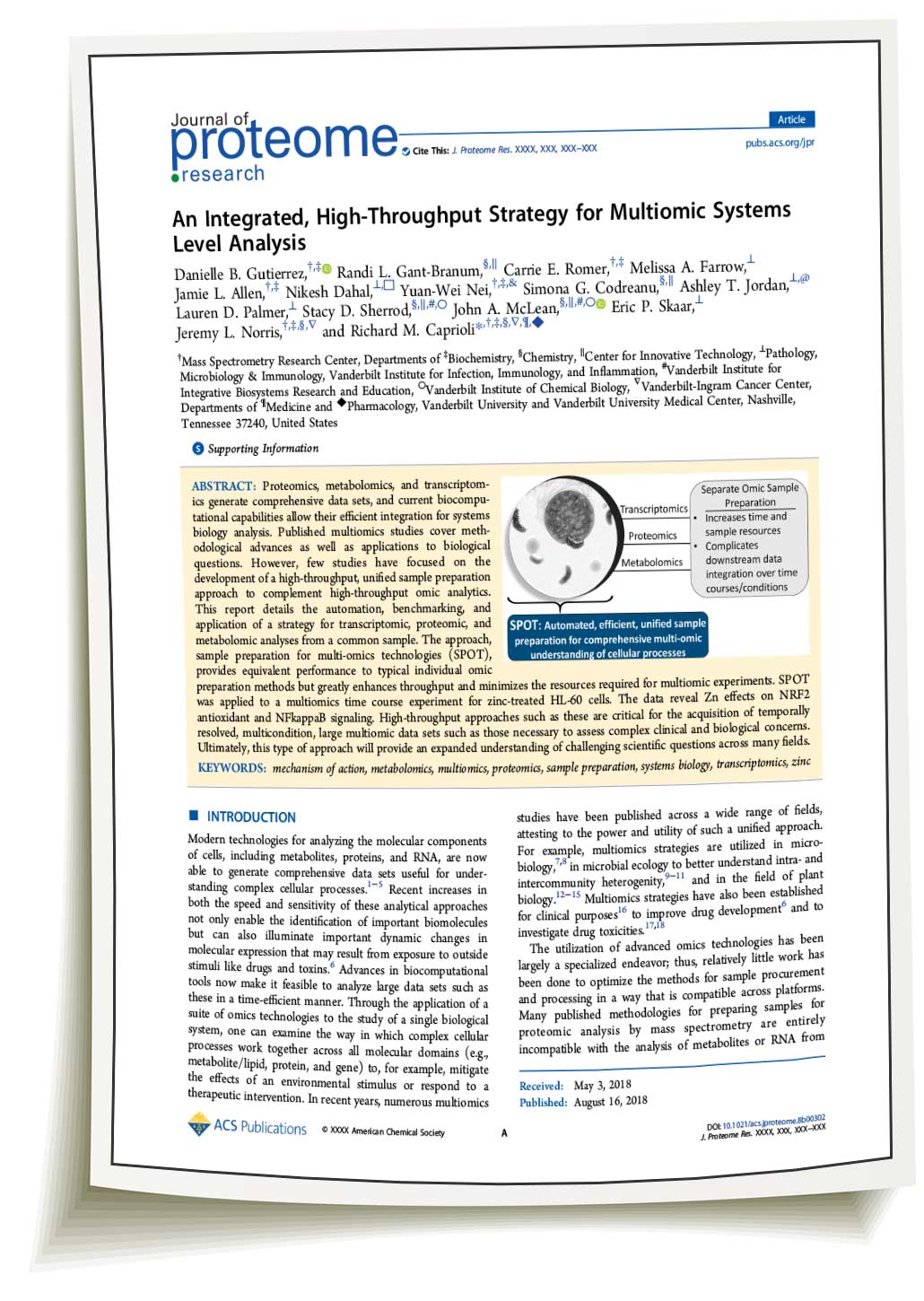
"Many published methodologies for preparing samples for proteomic analysis by mass spectrometry are entirely incompatible with the analysis of metabolites or RNA from the same sample due to the presence of specific buffer components or detergents."
The ideal, to study multiple omic systems from a single sample, is now possible using the process described in this Journal of Proteome Research paper: “An Integrated, High-Throughput Strategy for Multiomic Systems Level Analysis".
In the paper Caprioli et al. used Rapid-Digestion Trypsin/Lys-C (described on this page) in their tryptic digestion of proteomic samples.
Trypsin Digestion in a Fraction of Standard Digestion Time
Comparison of Peptide Spectral Matches: Rapid-Digestion Trypsin and Standard Digestion
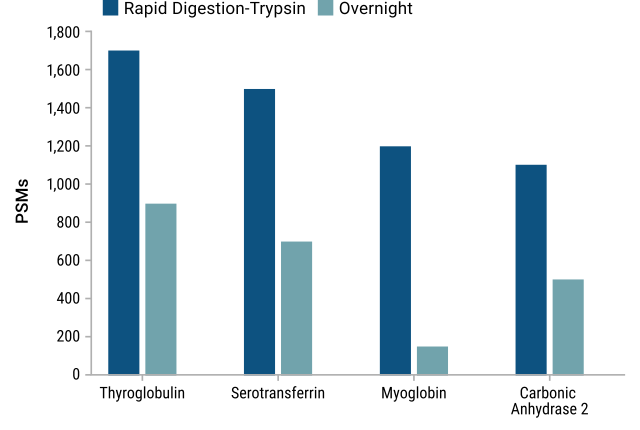
The increase in spectra noted for Rapid-Digestion Trypsin sample preparation (30-minute digestion) indicates more complete digestion than standard overnight digestion (16 hours using Trypsin Gold, Mass Spectrometry Grade).
Improved Sequence Coverage with Reduction and Alkylation Steps
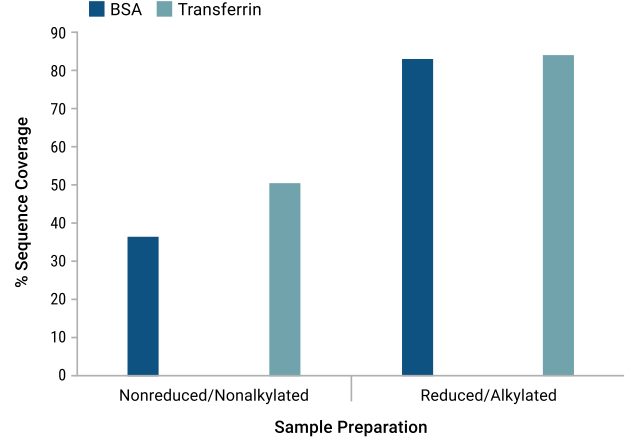
Both Rapid-Digestion Trypsin and Rapid-Digestion Trypsin/Lys-C (35-minute digestions) are compatible with reduction and alkylation steps, resulting in increased sequence coverage.
Protocols
Specifications
Catalog Number:
Contenido
| Item | Part # | Presentación |
|---|---|---|
|
Resuspension Buffer |
V181A | 1 × 500μl |
Rapid Trypsin Gold, MS Grade |
V528B | 1 × 100μg |
Rapid Digest Buffer |
VA106A | 1 × 30ml |
SDS
Search for SDSCertificado de Análisis
Use Restrictions
For Research Use Only. Not for Use in Diagnostic Procedures.Condiciones de Almacenaje
Contenido
| Item | Part # | Presentación |
|---|---|---|
|
Resuspension Buffer |
V181A | 1 × 500μl |
Rapid Trypsin/Lys-C Mix, MS Grade |
V507C | 1 × 100μg |
Rapid Digest Buffer |
VA106A | 1 × 30ml |
SDS
Search for SDSCertificado de Análisis
Use Restrictions
For Research Use Only. Not for Use in Diagnostic Procedures.Condiciones de Almacenaje
Resources
No related resources available
Related Products
Productos Similares
Trypsin/Lys-C Mix, Mass Spec Grade
Mayor recuperación de péptidos, mejor cuantificación de proteínas, mayor reproducibilidad.
V5071, V5072, V5073
Sequencing Grade Modified Trypsin
Tripsina de alta actividad y estabilidad fabricada para proporcionar la máxima especificidad.
V5111, V5117, V5113
Trypsin Gold, Mass Spectrometry Grade
Máxima especificidad de digestión con extrema resistencia a la digestión autolítica.
V5280
Usado con frecuencia junto con
Magnetic Proteomics Sample Prep (MPSP) Kit
Magnetic beads for streamlined, SP3-based proteomics sample preparation.
CS3325A04
IdeS and IdeZ Proteases
Enzimas de degradación de IgG que se escinden en un único punto por debajo de la región bisagra.
V7511, V7515, V8341, V8345
PNGase F
Cataliza la escisión de oligosacáridos ligados a N entre los residuos más internos de GlcNAc y asparagina.
V4831
Asp-N, Sequencing Grade
Sitio de escisión: N-terminal de Asp. pH óptimo: 4-9.
V1621